+43 678 7816241
berger.marlon@aol.com
1090, Vienna
drag me!
Ich sehe was was du nicht siehst
Artist: Paul Takunda Chiwona
Exhibition Production: Marlon Berger
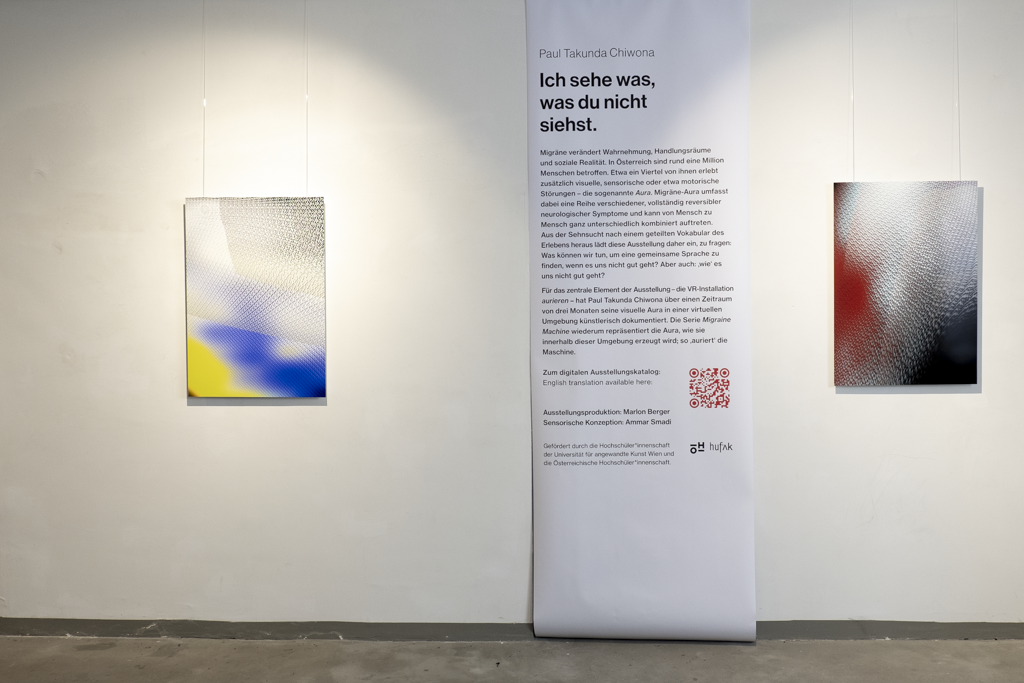
Migraine affects around one million people in Austria. And yet, it can be difficult to talk about migraine. Talking about migraine ‘with aura’ can be even more challenging, since only a quarter of those affected also experience sensory, visual, or motor disturbances: the so-called aura. How do we find words for when we’re not okay? And for ‘how’ we’re not okay?
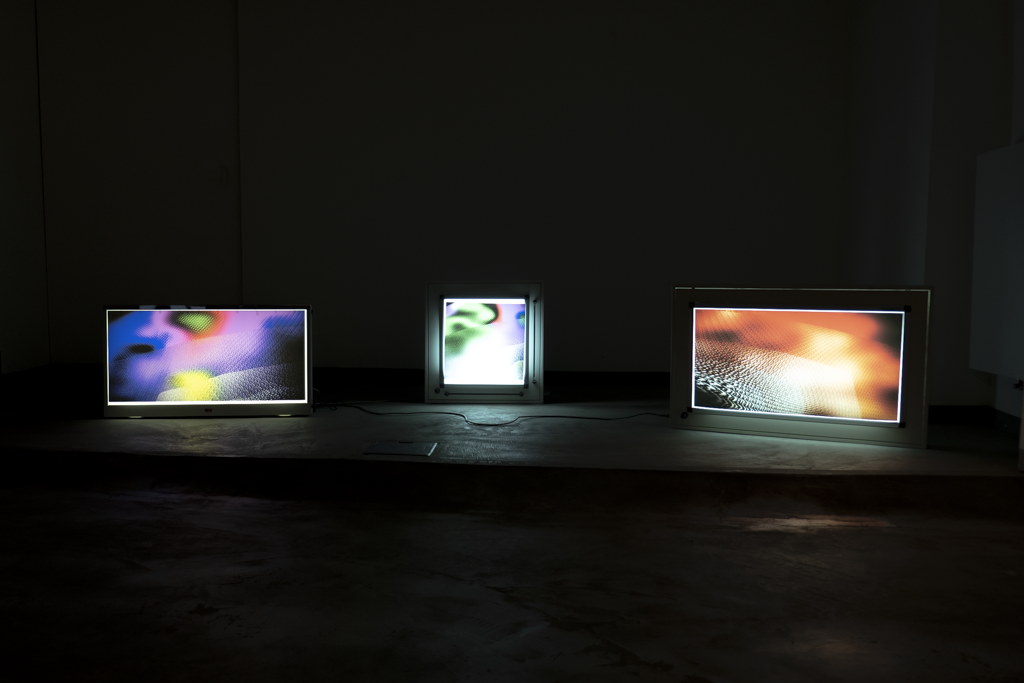
Ich sehe was, was du nicht siehst‘ presents an exhibition and event format on the subject of migraine with aura, bringing together a variety of perspectives: mixed reality, sensory installation, and participatory mediation create a space for understanding while also providing a platform for confrontation and discussion: Do you see what I see? I spy with my little eye …
Die unendliche Geschichte
The Albert and Nathaniel Rothschild city palaces in Vienna‘s 4th district were two of the most magnificent city palaces in Vienna at the time. After the Nazis invaded Austria in 1938, they were used as a “central office for Jewish emigration” and a Gestapo prison. After the war, both buildings and properties became the property of the Chamber of Labor.
They tore down the buildings, some of which were in good condition, and replaced them. This raises questions about how we should deal with such places of historic, and therefore contemporary, significance. The building which replaced the palaces after the war is now to be demolished again, and history is about to repeat itself.
„Die unendliche Geschichte“ proposes an alternative to another generic building, a suggestion on how we can treat such architecture, our past, and complex contemporary challenges of our modern world.
What was once repressed energy from a cruel past, now gets presented openly and transformed into electric energy coming from renewable sources like wind or sun. The reconnected urban space with a nearby park responds to these changes, diminishing or maximizing in height, resulting in a dynamic spatial experience.
As long as you love me
About Collective Abjection
As long as you lovef me is a participatory installation and performance in which the interior of a small room is transformed into a wax-covered cave.
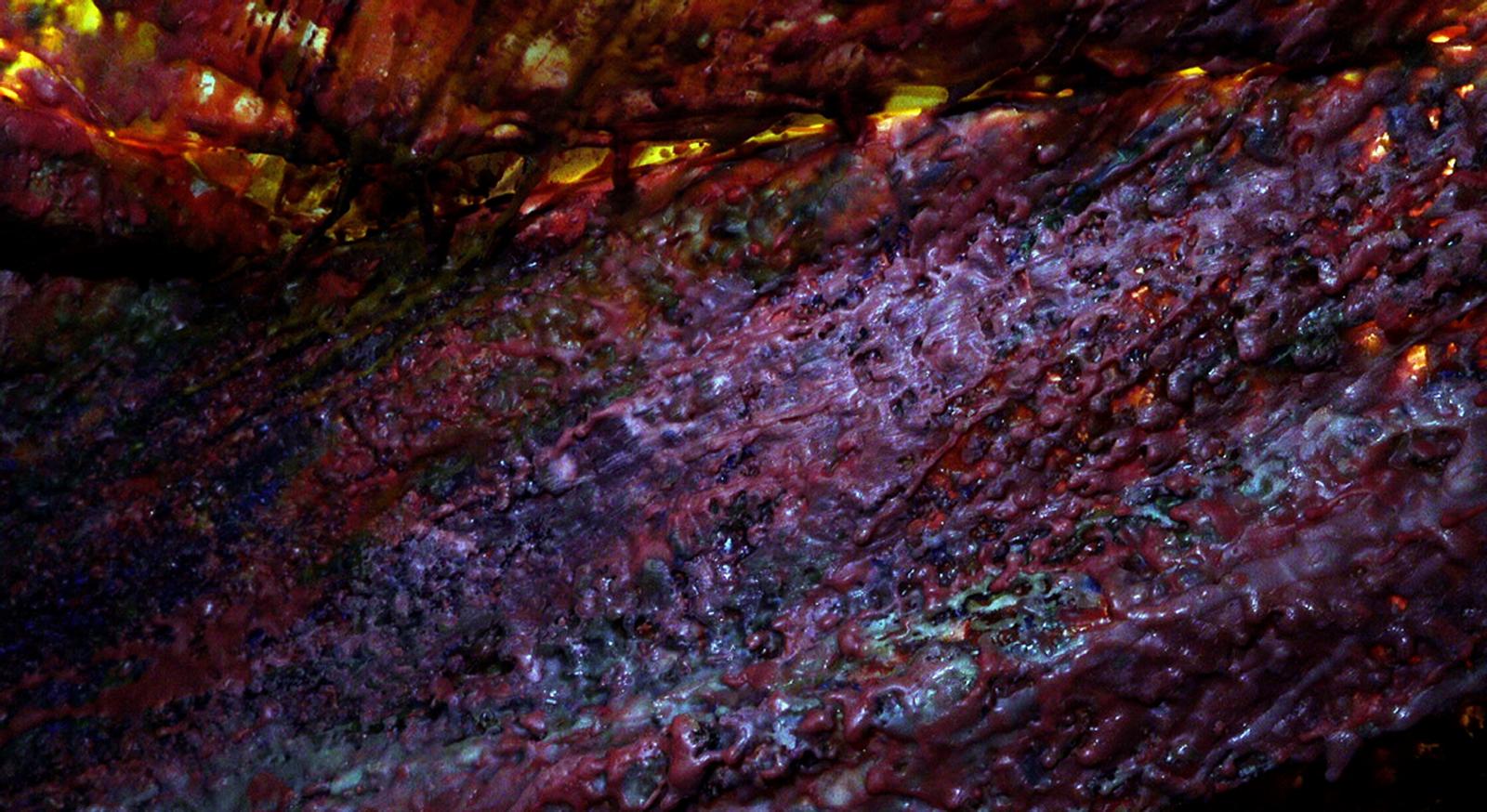
Over the course of a day, visitors collectively layer the space with wax, creating an immersive environment that shelters a central, 1.5-meter fountain sculpture with a fleshy, tumor-like form. Light and smell of the installation will pair with the organic dripping of the fountain and a digital sound installation.
Der glaeserne Gast
With: August Eckmann
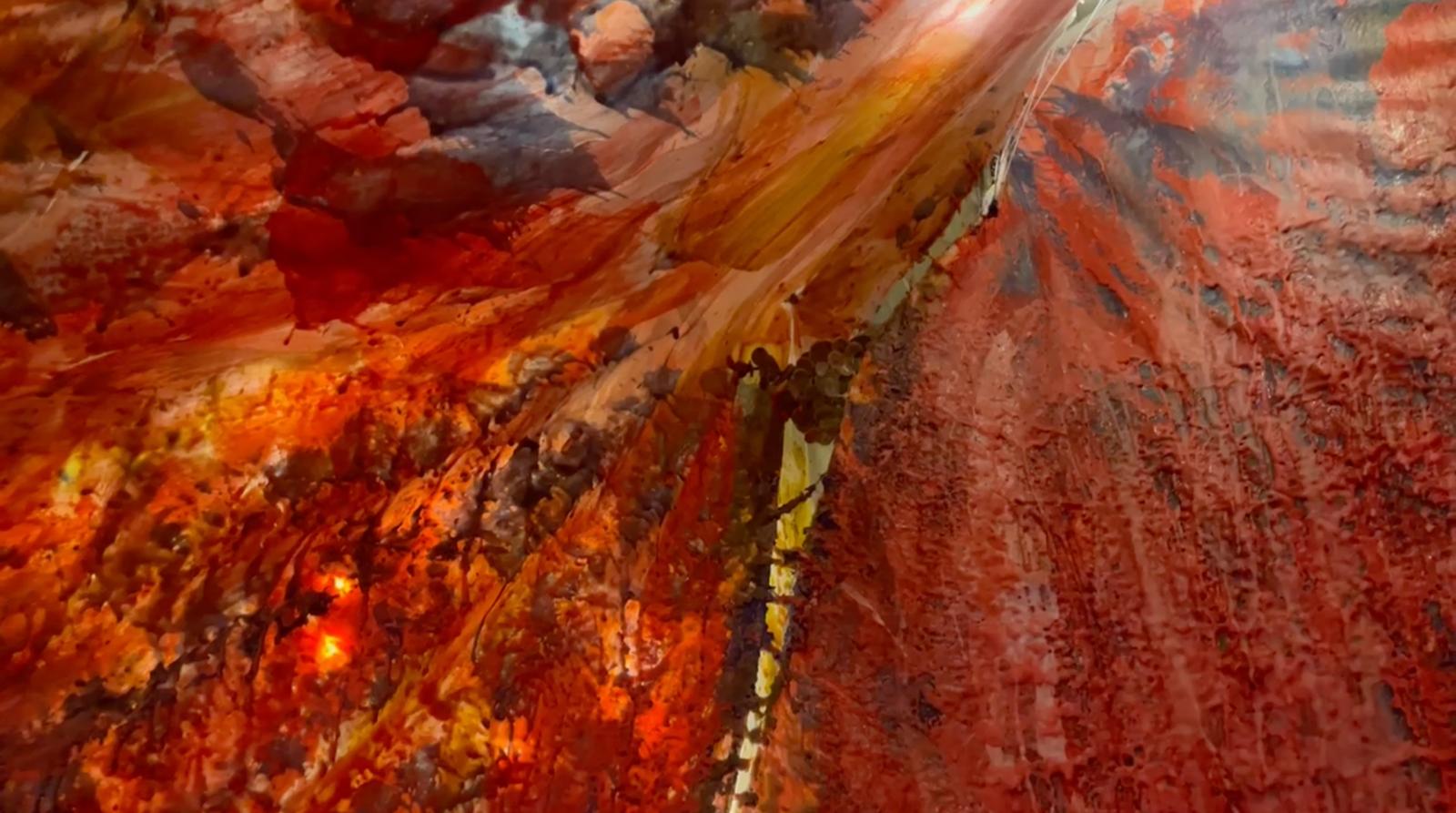
Humanity has always colonized topography, filling every void with structures. Yet we ourselves are spheres—born from one, living on one, made of countless microscopic ones. Why not also live inside them?
Spheres are efficient: they distribute light evenly, enclose maximum volume with minimal surface, and resist climate with grace. This project explores the sphere as a dwelling—both primal and futuristic—challenging conventional forms and proposing a fragile architecture for a changing world.
The architecture can grow like an organism, introducing a new typology of apartments, where spheres may be exchanged, expanded, or replaced— modules of life, in continuous transformation, like the public park which thrives underneath
Petrichor
With: Paul Czaloun, Olivia Deptuch
Along the Wiental river, this project proposes a rupture with the traditional logic of the skyscraper. Instead of the vertical tree—rooted, hierarchical, and rigid—it introduces a rhizomatic tower: a structure of multiple connections, nonlinear, without center or crown.
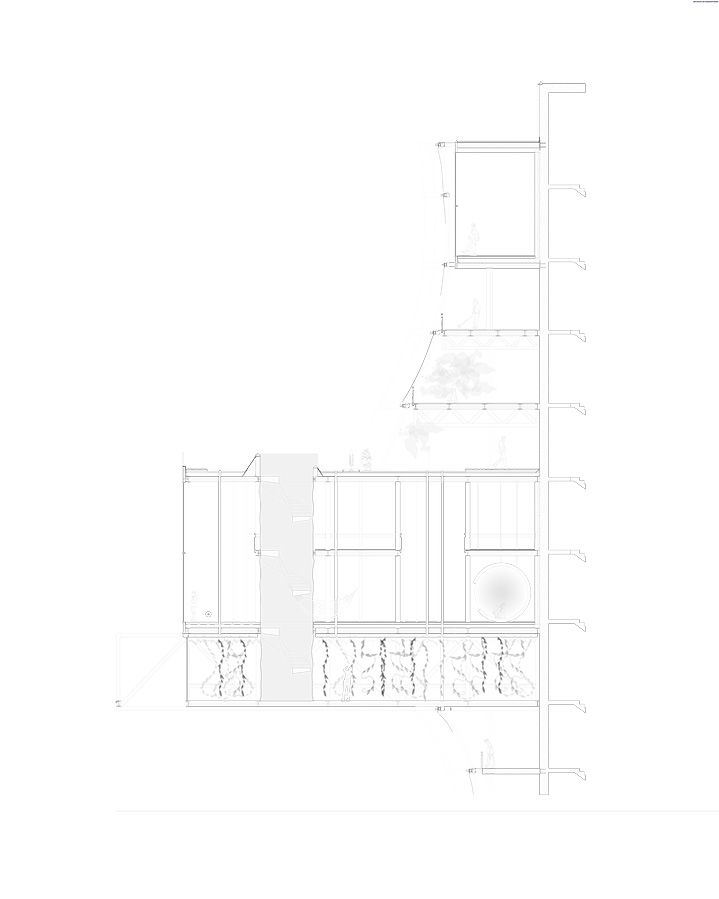
Through circulation and the role of a social condenser, the building becomes a vertical field where flows intersect freely. It dissolves linear stratification and unfolds as a three-dimensional park, stitching together river and city.
Public spaces are suspended, multiplied, and interwoven—an urban landscape that grows upward not as a monument of power, but as an evolving ecology of relations.
Building 1.0
With: August Eckmann
That the form of a building follows function can only be nonsense. After all, the latter changes unpredictably over the years. So how to design? In the context of sustainability, effective solutions are needed. The vision? Comprehensive. An apartment can be a bridge, an office can be a concert hall at the other end of the city.
A university that exists simultaneously in all cities, a university that exists and does not exist at the same time. Architecture is too slow and now faces the urge to reflect what is happening in our digital world. Always. Everywhere. Accessible 24/7. The solution to this is temporality. It‘s not about constructing a building that perfectly suits ONE purpose, but rather about constructing ALL buildings simultaneously.
Matter/Ether
With: August Eckmann
The Moon is a harsh place — yet one of extraordinary beauty. Caves have fascinated humanity since we first looked up to our satellite, and within its surface lie vast lava tubes, dark as the deepest sea.
Our proposal gently blends into this subterranean landscape, linking functional modules with the shortest possible paths- right through the cave ceiling. By reusing the lava tube itself as a colossal sun, the interior is illuminated and brought to life, transforming emptiness into inhabitable space.
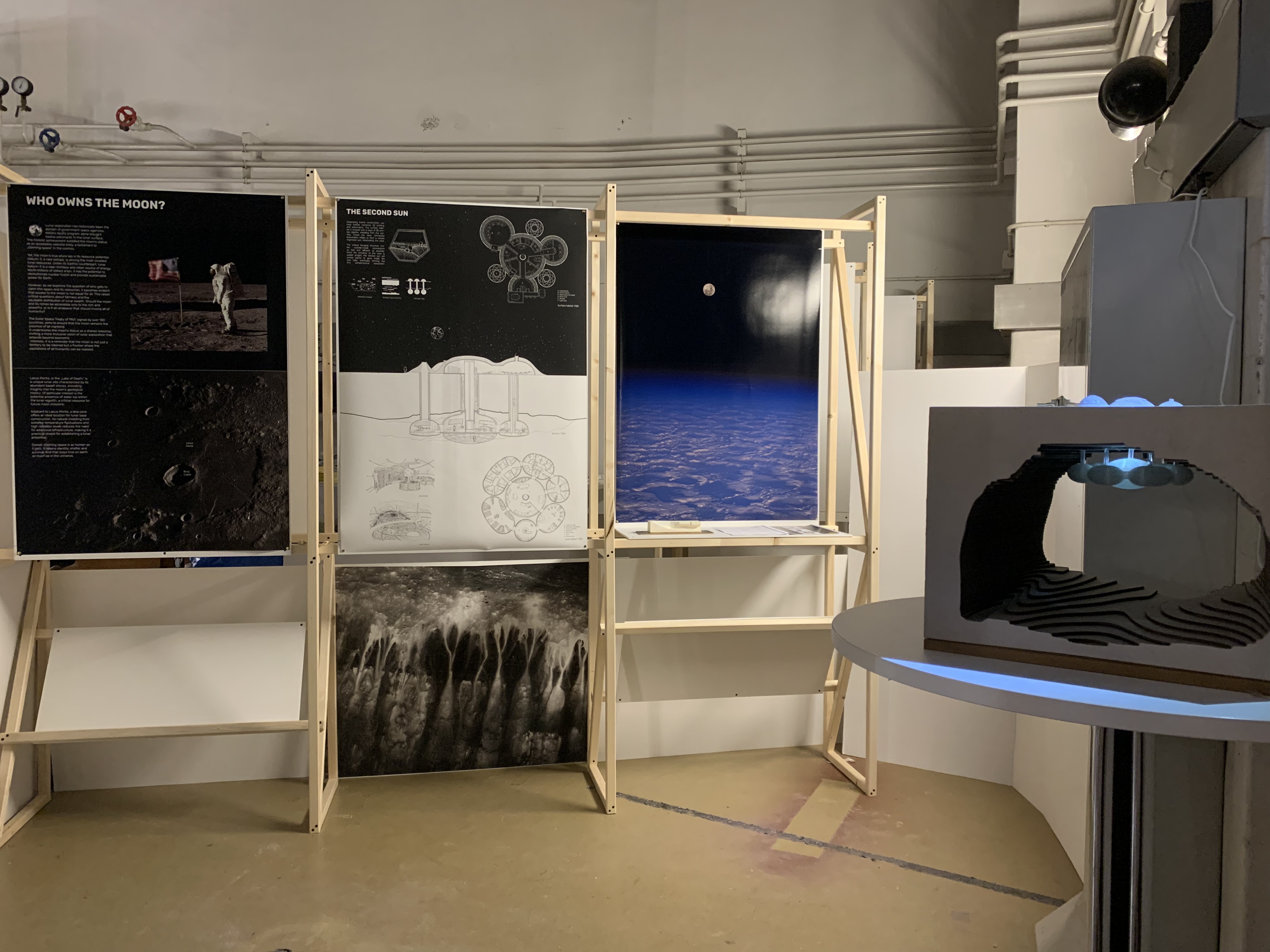
The structure hangs from the ceiling of the tube, taking advantage of its natural protection from radiation and micrometeoroids, while offering a fragile yet resilient framework for human presence.
This website is interactive. Drag tiles to rearrange them and reveal hidden thoughts.
Biography
Born in Munich, Germany, Marlon Berger moved to Vienna to study Theory of Communications at Universität Wien and Architecture at Technische Universität Wien. His Bachelor project “Die Unendliche Geschichte” was exhibited multiple times in both educational and independent contexts.
Through his ongoing freelance work in sculpture and exhibition design, Marlon Berger seeks to merge architecture, philosophy, and technology into speculative spatial narratives that explore the boundaries between materiality, perception, and social imagination.
Curriculum Vitae